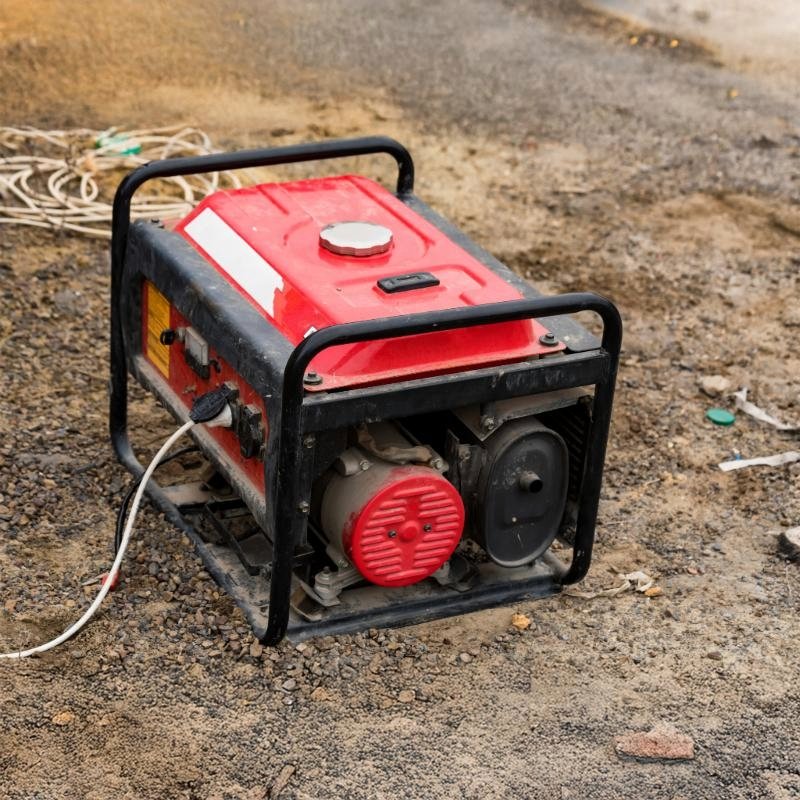
In the world of welding, power is paramount. But what happens when your critical job site is miles from the nearest electrical outlet, or when unexpected repairs demand immediate action in the field? This is precisely where the robust power and unparalleled versatility of a welder generator step in, transforming challenging remote locations into productive workspaces. These remarkable machines integrate the dual functionality of a powerful generator and a dedicated welder into a single, indispensable unit, ensuring your projects never grind to a halt due to lack of power.
This Super Pillar hub is your ultimate resource for understanding, selecting, and maximizing the potential of these essential tools. We'll explore everything from their fundamental operation to the cutting-edge features that set the best models apart. To begin your journey into mobile welding power, delve into our comprehensive Introduction to Welder Generators to grasp the basics of these game-changing machines.
Why Welder Generators are Indispensable for Mobile Work
Imagine needing to repair a fence line deep in a pasture, fix heavy equipment on a construction site far from any building, or maintain critical infrastructure in an isolated area. Without a reliable, self-contained power source, these tasks would be impossible. Welder generators provide that crucial independence, delivering both the specific electrical current needed for high-quality welds and auxiliary power for grinders, lights, and other essential tools. This ability to operate completely off-grid makes them invaluable assets for contractors, farmers, field mechanics, and emergency repair crews alike.
The best part? Modern welder generators are designed for durability and ease of use, built to withstand the rigors of demanding environments while still offering precise control over your welding arc. They are the true workhorses of any mobile operation.
Understanding the Heart of Your Powerhouse: Combo Units vs. Separate Setups
When considering engine-driven welding power, you generally encounter two primary configurations: integrated welder generator combos and standard generators used to power external welders. While a high-output regular generator (often over 10 kW) can theoretically power a plug-in welder, it often falls short in delivering the "clean" and stable power necessary for consistent, high-quality welding. This inconsistency can lead to frustrating arc performance and less than ideal results.
Welder generator combos, on the other hand, are specifically engineered with a built-in welder, reserving a portion of their output to ensure a smooth, stable arc. This dedicated design ensures optimal welding performance while still providing ample auxiliary power for other tools. Models like the ESAB Ruffian 150 DC even feature auxiliary generator output voltage that is independent of the welding current, meaning your arc performance remains smooth even when running other electrical tools simultaneously.
Decoding Performance: Key Features and Specifications That Matter
Choosing the right welder generator means understanding a variety of technical specifications. Key among these are the machine's continuous and surge wattage, indicating its power delivery for tools and general use. For instance, the Lincoln Electric Eagle 10.000 plus boasts a robust 9000 Watts continuous power, making it suitable for heavy-duty tools while also serving as a primary Stick welding machine. Engine type and horsepower also play a crucial role in overall reliability and fuel efficiency, with popular choices including Kohler and Briggs & Stratton.
Fuel capacity and run time are critical for uninterrupted fieldwork, with some units like the Tomahawk engine-driven welder offering a 7-gallon tank for whole-day operation. Portability is another major consideration, with models ranging from the relatively compact Hobart Champion 145 (222 lbs) to the heavier-duty Lincoln Electric Eagle (514 lbs). Lighter models often include running gear or wheelbarrow-style carts, like the Klutch 7500K, for easy transport. To dive deeper into the technical aspects that differentiate these machines, be sure to Get welder generator features and specs that align with your specific job requirements.
Beyond the Grid: Who Benefits Most from a Welder Generator?
The applications for welder generators are incredibly diverse, making them a cornerstone for various industries and individuals. From the vast stretches of pipeline construction and oil field maintenance to critical infrastructure repair, these machines provide the essential power needed where traditional electricity sources are nonexistent. Farmers rely on them for emergency equipment repairs in the middle of a field, while mobile welding contractors can take their services directly to clients, offering on-site fabrication and repair.
Even hobbyists or homeowners with large properties find immense value in the versatility of a welder generator for tasks like fence repair or building custom gates. If over 70% of your welding tasks involve fieldwork or off-grid scenarios, an engine-driven unit becomes not just convenient, but absolutely necessary. For a more detailed look at the wide array of professional and personal uses, explore our guide on Applications & Industries for Welder.
Engine-Driven vs. Plug-In Welders: Weighing Your Options
While engine-driven welder generators offer unparalleled versatility for remote work, it's important to understand how they compare to traditional plug-in welders, which are tethered to a stable power source. Plug-in welders generally boast higher amperage (often 500+ amps) and can achieve 100% duty cycles, making them ideal for heavy industrial work involving very thick materials. They are also often multi-process capable, handling MIG, Flux-cored, and TIG welding with ease.
Engine-driven welders, on the other hand, typically max out around 225 amps and usually have duty cycles up to 60%. However, modern units, like the Miller Fusion 160, offer advanced features such as Power Shift technology, allowing them to operate from either their internal engine or utility power. While plug-in welders might offer more raw power, the mobility and self-sufficiency of an engine-driven unit often outweigh this for fieldwork, despite the higher initial cost.
Choosing Your Ideal Power Partner: A Buyer's Blueprint
With a range of models and features available, selecting the right welder generator requires careful consideration. Think about the types of welding you'll primarily be doing (Stick, TIG, or even powering an external MIG/TIG unit), the thickness of the materials, and the required amperage. Your portability needs—whether it's for occasional farm use or daily transport to various job sites—will also heavily influence your choice of size and weight.
Consider the auxiliary power requirements for your tools; some units provide ample 120V and 240V outlets, while others focus more on welding output. Finally, factor in maintenance requirements and warranty specifics, as these can vary significantly between brands and components. Making an informed decision ensures you invest in a machine that will serve your needs reliably for years to come. For comprehensive advice on navigating these choices, refer to our detailed Buying Guide: Choosing the Right model for your specific projects.
Spotlight on Excellence: Leading Welder Generator Models
The market offers an impressive array of welder generators, each designed with unique strengths to cater to different demands. For those prioritizing portability and a comprehensive welding solution, the Tomahawk engine-driven welder stands out as the lightest at 202 lbs, offering 210 amps for Stick and TIG welding right out of the box. If versatility with dual power options is key, the Miller Fusion 160 is a compact marvel that can run on its 13.4 HP Kohler engine or utility power, tripling oil change intervals for reduced maintenance.
Heavy-duty users might lean towards the Lincoln Electric Eagle 10.000 plus, a gasoline-fueled powerhouse with 9000 Watts continuous power and a 23 HP Kohler engine for demanding applications. For farm or fence repair, the Hobart Champion 145 offers a lighter, more compact solution with 4,000 Watts continuous power and an integrated stick welder. Each model represents a careful balance of welding capability, generator output, and practical features, designed to meet specific professional and personal needs. To compare these and other top performers side-by-side, explore our in-depth analysis of the Top Welder Generator Brands & models available today.
Empowering Your Next Project
Welder generators are more than just tools; they are enablers of productivity and problem-solving, freeing welders from the constraints of traditional power sources. Whether you're a seasoned professional tackling remote infrastructure or a dedicated hobbyist enhancing your property, the right welder generator can be the difference between a stalled project and a successful completion. Equip yourself with the knowledge and the machine to deliver power and performance anywhere your work takes you.