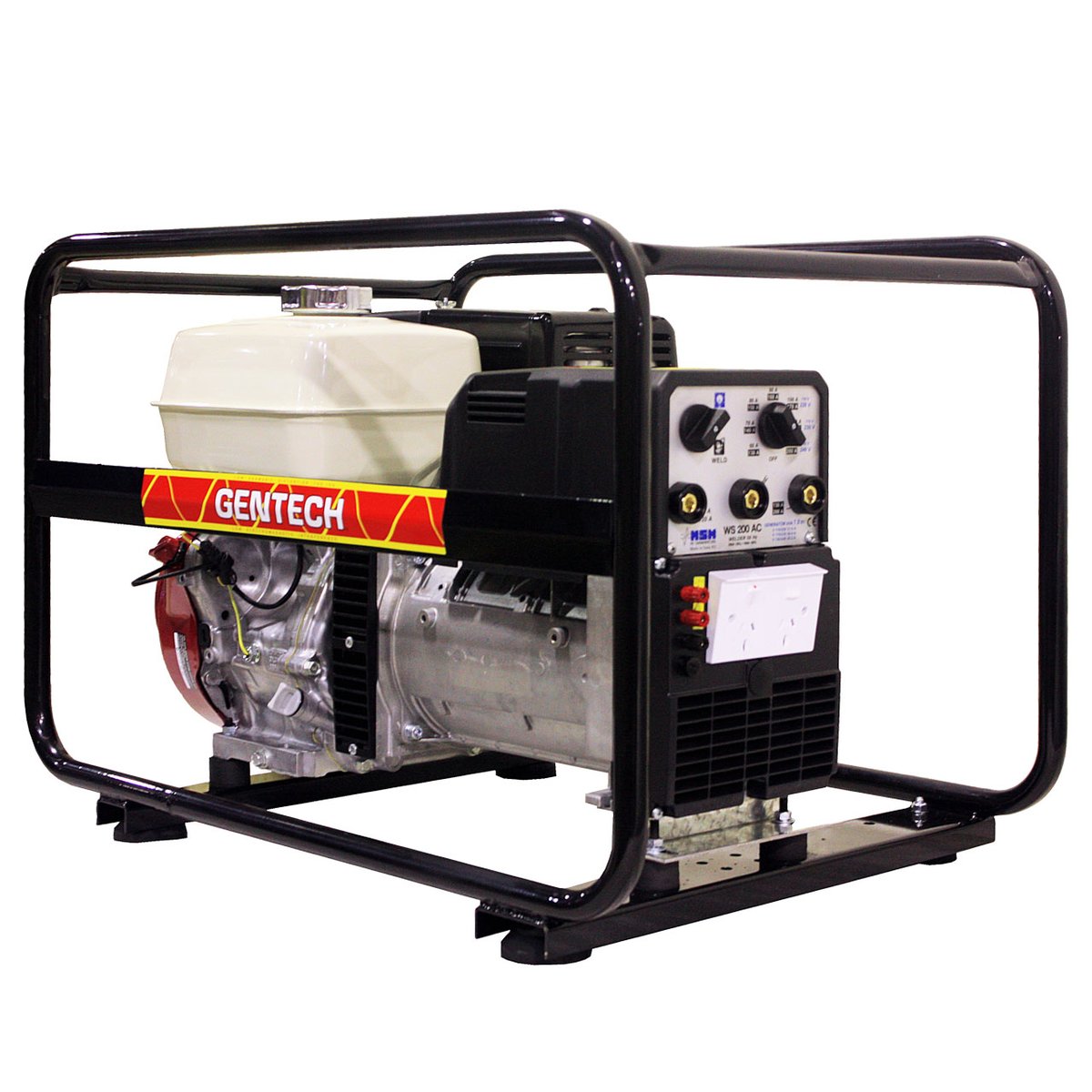
Picture this: You're tackling a major project, miles from the nearest power outlet, or perhaps your power just went out in a storm. How do you keep working, or even power essential tools? That's where a welder generator truly shines, blending the rugged capability of a welding machine with the essential power-generating features you need. Understanding the Key Features & Specifications of Welder Generators is crucial for making a smart investment that keeps your projects moving forward, no matter the location.
At a Glance: What You Need to Know
- What it is: A versatile machine that welds and generates electricity simultaneously.
- Why it's useful: Ideal for remote work, emergency power, and running multiple tools with one unit.
- Key specs: Look at power output (watts), fuel type, portability, and duty cycle.
- Safety first: Essential features like circuit breakers and thermal overload protection are non-negotiable.
- Consider alternatives: Compare with plug-in welders for shop work and regular generators for pure power.
Power Up Your Projects: The Welder Generator Defined
A welder generator is more than just a piece of equipment; it's a mobile powerhouse. Combining the ability to perform welding tasks with the capacity to generate electricity for other tools, these machines are a game-changer for professionals and serious hobbyists alike. The American Welding Society precisely defines it as "a welding machine equipped with an alternator or generator to produce electric power." This ingenious design enables mobile applications across diverse settings, from bustling construction sites to remote maintenance jobs and critical repair tasks. The demand for such portable powerhouses is on the rise, with welding equipment witnessing a projected compound annual growth rate (CAGR) of 6% by 2027.
Why Choose a Welder Generator? Unpacking the Core Benefits
So, why invest in one of these robust machines? The benefits extend far beyond simple welding, offering a blend of utility and independence that's hard to beat.
- Unmatched Portability for Outdoor Projects: Imagine welding a fence post in a sprawling field or repairing heavy machinery in a remote quarry. Welder generators make this possible, providing the power you need exactly where you need it, freeing you from the confines of fixed power sources.
- Dual Functionality: Weld and Power Simultaneously: This is perhaps their most compelling advantage. You can be laying down a bead while also powering a grinder, drill, or lights. This capability significantly boosts productivity and reduces the need for multiple, specialized machines on site.
- Reliable Emergency Power Source: Beyond welding, these units are invaluable during power outages. They can reliably supply electricity for essential appliances and tools, keeping crucial operations running when the grid goes down.
- Designed for Fuel Efficiency: Many modern welder generators are engineered with fuel economy in mind. This not only keeps operational costs down but also reduces their environmental footprint, a win-win for your wallet and the planet.
- Versatile Welding Options: Most models support a range of welding processes—MIG, TIG, and stick welding—allowing you to work with various materials like steel, aluminum, and stainless steel, adapting to different project requirements.
- For Every Skill Level: Whether you're a seasoned fabricator tackling complex industrial projects or a DIY enthusiast working on home improvements, there's a welder generator model that fits your expertise and project scale.
Navigating the Nitty-Gritty: Key Features & Specifications
When you're ready to choose, diving into the specifications is where the real decision-making begins. Here's a breakdown of what to scrutinize.
Power Output: The Heart of the Machine
This metric tells you the total wattage the generator can produce for both welding and auxiliary power. For most light to heavy-duty welding tasks, an output of 5,000 to 10,000 watts is generally suitable. Higher output doesn't just mean more power; it often translates to stronger, more consistent welds, supports a wider array of welding processes, and can even extend the machine's lifespan by reducing strain.
Fuel Type: Your Power Source Choices
The type of fuel your welder generator uses impacts its cost, performance, and environmental considerations.
- Gasoline: Often chosen for its higher power-to-weight ratio and general availability. Great for portability and intermittent use.
- Diesel: Known for greater fuel efficiency and exceptional longevity, making it a favorite for heavy, continuous use in demanding environments.
- Propane: A cleaner-burning option with lower emissions, though it might offer slightly reduced power output compared to gasoline or diesel.
Portability: Moving Power Where It's Needed
If you're frequently transporting your unit, portability is paramount. Look for models equipped with sturdy wheels, ergonomic handles, and a lightweight design. Many find models under 200 pounds significantly easier to maneuver and transport, making them ideal for field operations.
Duty Cycle: How Long Can You Weld?
The duty cycle indicates how long a welder can operate continuously within a 10-minute period before needing to cool down. It's usually expressed as a percentage at a given amperage. For instance, a 30% duty cycle at 150 amps means the welder can operate for 3 minutes at 150 amps, followed by 7 minutes of rest. A higher duty cycle is crucial for sustained, heavy-duty welding without interruption. Common duty cycles range from 20% to 60%.
Noise Level: Keeping the Peace
Measured in decibels (dBA), a welder generator's noise level can significantly impact user comfort, especially during prolonged operation or in noise-sensitive environments. Models below 70 dBA are generally preferred for their quieter performance, reducing operator fatigue and disturbance.
Advanced Features & Controls: Smart Welding Made Easier
Modern welder generators come packed with features designed to enhance usability and performance. Keep an eye out for:
- Digital Displays: Provide precise readings and easier control.
- Automatic Breakers: Protect against overload, preventing damage and potential hazards.
- Multiple Output Ports: Allow you to power various tools simultaneously.
- User-Friendly Controls: Intuitive interfaces simplify operation, even for less experienced users.
- Inverter Technology: Delivers a smoother, more stable power output, crucial for high-quality welds.
Brand Reputation & Warranty: Assurance of Quality
Choosing a reputable brand often means investing in reliability, quality construction, and excellent customer service. Look for brands known for their durability in the welding industry. A warranty serves as your guarantee, with a minimum of one year being a good benchmark for peace of mind.
Safety First: Essential Protective Features
Working with powerful equipment demands a strong focus on safety. Welder generators are equipped with several critical features designed to protect both the operator and the machine.
- Circuit Breakers: These automatically interrupt the electrical flow if an overload occurs, preventing damage to the generator and mitigating fire risks.
- Thermal Overload Protection: This crucial feature automatically shuts down the generator if its internal components begin to overheat, preventing serious damage and extending its lifespan.
- Ground Fault Circuit Interrupter (GFCI): By detecting ground faults, GFCIs quickly cut power, significantly reducing the risk of electric shock, especially in damp or wet conditions.
- Low Oil Shutdown: To prevent catastrophic engine damage, this system automatically stops the engine if the oil level drops below a safe threshold.
- Voltage Regulation: This feature maintains a consistent output voltage, safeguarding connected equipment from damaging power surges or sags.
- Emergency Stop Switch: A readily accessible switch that allows for rapid power cutoff in hazardous situations, offering an immediate safety response.
- Protective Guards and Covers: These physical barriers shield the user from sparks, extreme heat, and dangerous moving parts, enhancing overall safety during operation.
Welder Generator vs. The Alternatives: Making the Right Choice
Choosing the right welding equipment means understanding the nuances between different types of machines. Let's compare welder generators with their closest relatives. For a more comprehensive overview, consider consulting a complete guide to welder generators.
Engine-Driven Welder vs. Plug-in Welder
This is often the first major decision point.
- Flexibility: Engine-driven welder generators are kings of the field, offering unparalleled versatility for remote work or any location without grid power. Plug-in welders, while limited by their need for an electrical outlet, are often capable of multi-purpose welding (MIG, Flux cored, cutting) with stable power. If more than 70% of your work involves field operations, an engine-driven welder is typically the recommended choice.
- Welding Power: Plug-in welders generally excel here, benefiting from a stable power supply. They often exceed 500 amps with a 100% duty cycle, ideal for heavy-duty, continuous fabrication. Engine-driven welders typically operate under 225 amps with duty cycles up to 60%. For welding thick materials requiring high power, a plug-in unit is often superior.
- Welding Performance: Modern engine-driven welders, like some ESAB Ruffian models, deliver surprisingly consistent welding performance by isolating the auxiliary generator output voltage from the welding current, ensuring a smooth arc.
- Overall Cost: Engine-driven welders have a higher initial price tag but offer invaluable flexibility for contractors working in the field, often quickly paying for themselves through increased operational reach. For dedicated indoor shop welding, a plug-in welder is generally more cost-effective.
Welder Generator Combo vs. Regular Generator
While both produce power, their primary design intent differs significantly.
- Welder Generator Combo: These units feature a built-in welder and are specifically designed to provide "clean" power, essential for a smooth, stable welding arc. However, because the welder consumes some of the power, their overall auxiliary power rating might be slightly lower than a standalone generator.
- Regular Generator: These prioritize high power output (often exceeding 10 kW) but their power may not be "clean" enough for consistent welding results. While they can provide emergency power for tools, they are not typically the primary choice for quality welding.
Smart Investments: Pricing & Leading Brands
Welder generators come in a wide price range, reflecting their power, features, and brand reputation. Budget-friendly options typically range from $500 to $3,000, while more advanced and heavy-duty industrial models can cost significantly more.
When considering a purchase, look to leading brands renowned for their quality and innovation in the welding industry:
- Lincoln Electric
- Hobart
- Klutch
- Miller
- ESAB
- Tomahawk
Deep Dive: Spotlight on Specific Welder Generator Models
Let's explore some notable models, highlighting what makes each stand out.
TOMAHAWK Welder Generator
This model offers a solid blend of welding and power generation. With a 120 Amp welding capacity, it can simultaneously provide 2200 watts of power for electric tools. It boasts a stable sine wave inverter, making current adjustment straightforward, and is known for its rugged, user-friendly design. Capable of handling 1/4 and 3/8-inch rods with ease, it delivers a welding output of 210 Amps (Stick and TIG, with a kit) at a 60% duty cycle. Power comes from a Tomahawk 15 HP inverter engine with a 7-gallon gasoline tank, and it offers two 120V auxiliary outlets. Weighing 202 lbs, it’s relatively portable for its capabilities.
Lincoln Ranger 330MPX
While more expensive and larger than the Tomahawk, the Lincoln Ranger 330MPX offers higher amperage and is engineered for heavy-duty welding tasks. It's recognized for a stable arc even on thicker materials, a quiet engine, intuitive controls, and a digital display. Equipped with wheels for portability, it’s built for durability in demanding environments.
Lincoln Electric Eagle 10.000 Plus
A powerful option for significant auxiliary power, the Eagle 10.000 Plus provides 9000W continuous / 10,500W peak power. Weighing 514 lbs, it’s definitely on the heavier side, often requiring a truck-mount kit. It runs on a 23 HP Kohler Gasoline engine, consuming about 1.5 gal/hour at 210 amps DC from its 12-gallon tank. While its primary welding function is stick, it can power plug-in MIG/TIG welders and offers substantial auxiliary power with 38 amps (120V/240V) and two 40-amp 120V outlets.
Hobart Champion 145 Arc Welder/Generator Combo
This model strikes a great balance between welding and auxiliary power, delivering 4,000W continuous / 4,500W peak. At 222 lbs, it includes wheels for easier portability. It's powered by a 305 cc, 10 HP Briggs & Stratton engine with a 6.25-gallon tank, uniquely allowing refueling while the engine is running. It features a built-in 145-amp stick welder (up to 1/4″ thick) with a 30% duty cycle at 130 amps. With electrical components by Miller, it offers reliability and four GFCI 20-Amp, 120V AC outlets, plus one 20 Amp, 240V AC outlet.
Klutch 7500K Arc Welder/Generator
An affordable yet capable option, the Klutch 7500K provides 6,000W continuous / 6,600W peak power. Weighing 220 lbs with its included wheel cart, it's quite portable. It's powered by a 4-cycle, 14 HP Kohler engine with a 5-gallon tank, offering up to 8 hours of runtime. It supports 60–170 A stick welding (up to 3/8-inch thick) and includes four 115V, 20 Amp outlets and one 240V, 30 Amp twist-lock outlet. It comes with a generous 3-year warranty for the welder and 2 years for the engine.
Miller Fusion 160 Engine-driven Welder Generator
The Miller Fusion 160 offers 6200W continuous / 6500W peak power and weighs 242 lbs. It’s driven by a 13.4 HP Kohler engine, recommending Kohler PRO 10W-50 full synthetic oil to extend oil change intervals to 300 hours, a significant maintenance advantage. A standout feature is its Power Shift technology, allowing it to run its 160-amp inverter stick welder from either the generator itself or directly from 120/240V utility power. It provides 160 amps at a 20% duty cycle.
ESAB Ruffian 150 DC Manual Metal Arc Welder
This model is a strong contender for its welding focus, delivering 4,000W continuous / 4,500W peak power from its generator. Weighing 236 lbs, it includes wheels and handles for easy transport. Powered by a 14-HP KOHLER® Command PRO engine with a 5-gallon tank, it boasts a 6.5-hour runtime. A key feature is its auxiliary generator output voltage, which is independent of the welding current, ensuring stable power. It offers four 120V and one 240V auxiliary outlets. For welding, it provides 150A at a 60% duty cycle, with adjustable arc force and easy arc starting, supporting electrodes up to 5/32 inches.
Making Your Decision: A Quick Checklist for Confident Buying
Choosing the ideal welder generator doesn't have to be a headache. By carefully considering your specific needs against the features and specifications discussed, you can confidently select a machine that will serve you well for years to come.
Before you make that final purchase, ask yourself these questions:
- What kind of welding will I primarily be doing (e.g., light repairs, heavy fabrication)? This dictates your required amperage and duty cycle.
- How often will I need auxiliary power, and for what types of tools? This determines your necessary wattage output.
- Will I be working mostly in remote locations, or do I have consistent access to power? This informs your choice between engine-driven and plug-in, and the importance of portability.
- What's my budget, and how does that align with my power and feature needs?
- Are there any noise restrictions where I'll be working?
- What's the availability and cost of different fuel types in my area?
- What safety features are most critical for my typical work environment?
By carefully evaluating these points, you’ll be well-equipped to choose a welder generator that not only meets your current demands but also offers the flexibility and reliability you need for future projects. Invest wisely, and you'll gain a powerful, versatile partner for years of productive work.