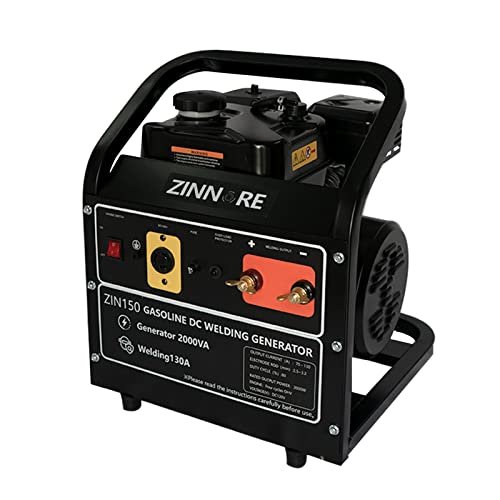
So, you're in the market for a welder generator – that powerhouse machine that lets you lay down professional-grade beads while simultaneously powering your entire mobile workshop, all without a power outlet in sight. This isn't just about picking any piece of equipment; it's about making a strategic investment that impacts your productivity, project quality, and bottom line. Getting it right means understanding the nuances that differentiate a good machine from the perfect machine for your specific needs. This comprehensive Buying Guide: Choosing the Right Welder Generator will cut through the noise, equipping you with the expert knowledge to make a confident decision.
Whether you're repairing a fence on a remote ranch, constructing a new steel frame on a grid-less job site, or just need reliable backup power for your home and essential repairs, your choice of welder generator can make or break your operation. Let's dig in.
At a Glance: Key Takeaways for Smart Shopping
- Don't Skimp on Amperage: Always size up your welder's amperage to ensure smooth arc starts and prevent engine stalling, especially for heavy-duty work.
- Power Your Tools: A good 200A welder generator should offer at least 5-6kW of auxiliary power for your grinders, lights, and other essentials.
- DC is for Pros: While AC is basic, DC provides a smoother, more stable arc, crucial for professional results and specialty welding.
- Duty Cycle Matters: Match the machine's duty cycle to your workload – hobbyists can get by with 30-40%, but professionals need 60-100%.
- Fuel Your Future: Gasoline offers portability and lower upfront cost; diesel provides efficiency and longevity for continuous, heavy use.
- Reputable Engines = Reliability: Look for well-known engine brands like Honda, Kohler, or Yanmar for parts availability and robust performance.
- Safety First: Prioritize features like CO Watchdog sensors, overload protection, and low-oil shutdown.
Understanding the Heart of Your Mobile Workshop: What is a Welder Generator?
Before we dive into the nitty-gritty, let’s quickly define what we're talking about. A welding generator is a brilliantly engineered, dual-purpose machine. At its core, it's an engine-driven electrical generator, but with a specialized alternator designed to produce both high-amperage welding current and standard AC auxiliary power.
Think of it as your portable power station and welding shop rolled into one. It empowers you to tackle welding tasks anywhere – from remote construction sites to agricultural fields – while simultaneously running power tools like grinders, air compressors, or even emergency lights and appliances. This versatility is what makes it an indispensable tool for contractors, farmers, mobile repair services, and anyone needing serious power off-grid.
The Ultimate Decision Matrix: Key Considerations for Choosing Your Welder Generator
Selecting the right welder generator isn't about finding the most expensive model or the one with the biggest numbers. It’s about carefully matching the machine's capabilities to your specific needs, project types, and budget. Here’s how to break down the decision.
1. Amperage and Rod Diameter: Sizing Your Welding Muscle
This is arguably the most critical starting point. The amperage output of your welder generator dictates the thickness of material you can weld and the size of electrodes you can run. Underpowering your needs leads to frustration, poor welds, and a stalled engine. Overpowering, while safer, means unnecessary cost and weight.
- Light Repairs (3mm / 1/8″ rods): For tasks like mending fences, repairing brackets, or working with steel up to 4mm (approx. 5/32″) thick, you'll typically need around 80-90 Amps. Many compact welder generators can handle this with ease.
- Heavy Structural Welding (4mm / 5/32″ rods): When you're dealing with substantial projects like fabricating beams, repairing heavy machinery, or welding steel up to 10mm (approx. 3/8″) thick, you'll require significantly more power. Look for machines capable of 120-200 Amps.
Actionable Insight: Always choose a machine with a power buffer. If your common tasks require 180 Amps, aim for a 200 Amp machine. This ensures you have headroom for smooth arc initiation, prevents engine bog-down, and allows for flexibility with different rod types or slightly heavier materials. An engine that struggles to start the arc will quickly wear out and deliver inconsistent results.
2. Auxiliary Power Output (kW): Keeping Your Tools Humming
A welder generator isn't just for welding; it's also your portable power plant. You'll need sufficient auxiliary power (measured in kilowatts, kW) from its AC outlets to run all your essential tools simultaneously – think angle grinders, chop saws, air compressors, floodlights, or even charging batteries.
- Calculate Your Needs: List all the tools you anticipate running at the same time and find their wattage ratings. Add them up. Remember that tools with motors (like grinders) have a higher "surge" wattage requirement when they start up.
- Rule of Thumb: For a 200A class welder, you should ideally look for a machine that provides at least 5kW to 6kW of auxiliary power. This capacity ensures you can weld and operate a power-hungry grinder or compressor without tripping breakers or overloading the generator. Skimping here means constant interruptions and reduced productivity.
3. AC vs. DC Output: The Current Debate
The type of current your welder generator produces significantly impacts welding performance and versatility.
- AC (Alternating Current):
- Pros: Generally found in more entry-level or budget-friendly machines. It's perfectly adequate for basic stick welding on common steel types.
- Cons: The arc can be harder to start and maintain, especially for less experienced welders. It's not ideal for welding thin materials, stainless steel, or using specialized electrodes. You'll often find more spatter with AC.
- DC (Direct Current):
- Pros: This is the professional choice. DC provides a much smoother, more stable arc, better penetration, and less spatter. It’s essential for welding stainless steel, cast iron, and using many specialized electrodes (like low-hydrogen rods). Many modern DC machines also allow for polarity changes (DC+ or DC-) which expands their versatility for different applications.
- Cons: Generally higher purchase price.
Recommendation: If your work demands precision, versatility with different metals, or you're aiming for professional-grade welds, a DC output machine is highly recommended. If you just need to tack a few pieces of mild steel together occasionally, an AC unit might suffice.
4. Duty Cycle: Welding Without Interruption
Duty cycle is a critical specification that many overlook, but it directly impacts your productivity.
- Definition: The duty cycle tells you how many minutes within a 10-minute period the machine can weld at its rated current before it needs to cool down to prevent overheating.
- Example: A "60% @ 200A" rating means the machine can weld continuously for 6 minutes at 200 Amps, then requires 4 minutes of cooling. A "100% @ 150A" rating means it can weld indefinitely at 150 Amps.
- Hobbyist/Light Repair: For occasional, short bursts of welding, a 30-40% duty cycle is often sufficient. You'll spend more time preparing than welding, so cool-down periods aren't a major issue.
- Professional/Production/Pipeline: If you're welding for extended periods, such as on construction sites, pipelines, or for heavy fabrication, you need a high duty cycle. Aim for 60-100% duty cycle at your required amperage to maximize productivity and avoid constant downtime. Diesel welders often excel in this area.
5. Fuel Type & Flexibility: Gasoline vs. Diesel (and Beyond)
The choice of fuel significantly impacts operating costs, performance, and portability.
- Gasoline Welders:
- Pros: Generally have a lower initial purchase price, are lighter, and more portable. They are typically easier to start in cold weather.
- Best For: Mobile service professionals, DIY enthusiasts, light contractors, and projects requiring short-term, intermittent use.
- Considerations: Higher fuel consumption compared to diesel, and typically have a shorter engine lifespan under heavy, continuous use.
- Diesel Welders:
- Pros: Superior fuel efficiency (lower running costs over time), exceptional engine life, and higher torque, which translates to a more stable arc even under load. They are built for continuous, heavy-duty operation.
- Best For: Mining operations, large construction sites, pipeline work, heavy fabrication, and any application requiring all-day, continuous use in demanding environments.
- Considerations: Higher upfront cost, heavier, and can be more challenging to start in extreme cold without pre-heaters.
- Tri-Fuel Options: Some advanced generators offer the flexibility to run on gasoline, propane, or natural gas. This can be incredibly convenient if you have access to different fuel sources or want to capitalize on cheaper alternatives. They offer adaptability but might come with a higher price tag.
6. Engine Technology: Traditional Power vs. Inverter Precision
The type of generator technology affects both power quality and welding performance.
- Traditional Engine-Driven Models (Conventional Generators): These are rugged, reliable, and deliver raw power for heavy-duty tasks. They are often less expensive and more forgiving of rough handling. Their power output is less refined, but perfectly adequate for most stick and flux-cored welding.
- Inverter Generators: These represent more modern technology. They rectify AC power to DC, then invert it back to a very clean AC sine wave (or stable DC for welding).
- Pros: Deliver a stable, "clean" sine wave, which is ideal for sensitive electronics (laptops, plasma cutters) and for precise welding arcs, particularly TIG welding. They are often more fuel-efficient, quieter, and more compact.
- Cons: Generally more expensive and can be more susceptible to damage from very harsh environments or impacts compared to traditional robust designs.
- Welding Benefit: For advanced welding processes like TIG, an inverter-based welder generator offers superior arc control, making it much easier to achieve high-quality, spatter-free welds. The Tomahawk 15 HP Engine Driven 2,000 Watt Generator, for example, boasts a built-in inverter for stable sine wave output, making it suitable for both stick and TIG.
7. Welding Process Compatibility: Matching the Machine to Your Craft
Are you a stick welder, TIG guru, MIG maestro, or do you need it all?
- Stick (SMAW): Most welder generators are designed primarily for stick welding. If this is your main process, ensure the amperage and duty cycle meet your needs.
- TIG (GTAW): For TIG welding, especially on sensitive materials, you'll want an inverter-based DC machine that offers precise current control and a stable arc. Some machines will offer Lift-Arc TIG, which is a step up from scratch start.
- MIG (GMAW) & Flux-Cored (FCAW): While some specialized welder generators can support MIG/Flux-Cored, they often require external wire feeders that draw power from the auxiliary outlets. Look for machines explicitly designed for multiprocess use if MIG/FCAW is a priority. The Lincoln Ranger 330MPX, for instance, is a prime example of a multiprocess engine welder generator.
- Multiprocess Machines: These versatile units can handle stick, TIG, MIG, and flux-cored. They are excellent for diverse workshops or contractors who face varied tasks, offering maximum flexibility in one package.
8. Reliability & Build Quality: Investing in Longevity
A welder generator is an investment, especially for commercial use. You want a machine that will stand up to the rigors of the job site.
- Engine Brand: The engine is the heart of the machine. Prioritize reputable brands known for their durability, performance, and global parts availability. Think Honda, Kohler, Yanmar, or other top-tier OEM (Original Equipment Manufacturer) engines. A generic engine might save money upfront but could lead to headaches down the line.
- Protection: Look for robust physical protection. A full roll cage is essential for job site use, shielding the engine and generator components from accidental impacts, bumps, and drops.
- Durability: Examine the overall construction. Are the enclosures made from heavy-gauge steel? Is there adequate weather protection for outdoor use? Commercial-grade machines should feel solid and well-engineered.
- Internal Components: While harder to assess externally, a reputable brand generally implies higher quality internal components for both the engine and the generator/alternator section.
9. Portability & Design: On the Move
How often will you be moving your machine? And how far?
- Weight & Size: Welding generators can range from relatively compact units around 100 kg (220 lbs) to massive, multi-ton beasts. Assess your transportation capabilities. Can it fit in your truck bed? Do you have a trailer?
- Handles & Wheel Kits: For machines over 100 kg, a sturdy wheel kit is non-negotiable. Look for large, pneumatic tires that can handle rough terrain. Robust lifting hooks and well-designed handles make maneuvering easier. The Tomahawk Welder Generator Stick Welder Engine Driven 120 Amp, for instance, emphasizes its compact and lightweight design for easy transport.
- Footprint: Consider the physical space it will occupy in your vehicle or on the job site.
10. Safety Features: Beyond the Arc
Welder generators are powerful machines, and safety should always be a top priority. Look for integrated features that protect both the operator and the equipment.
- CO Watchdog Shutdown Sensors: These are crucial for generators that might be used in enclosed or semi-enclosed spaces. They automatically shut down the engine if hazardous levels of carbon monoxide are detected. The WEN 14,500-Watt Tri-Fuel Generator features this.
- Overload Protection: Circuit breakers on both the welding output and auxiliary power outlets prevent damage from excessive current draw.
- Low-Oil Shutdown: This essential feature automatically turns off the engine if the oil level drops too low, preventing catastrophic engine damage.
- Arc Force/Hot Start: While not strictly a "safety" feature, these welding aids improve arc starting and stability, reducing frustration and potential for poor welds.
- Certified Compliance: Ensure the machine meets relevant safety standards (e.g., CSA, ANSI, OSHA compliance where applicable).
11. Ease of Use: Getting to Work Faster
User-friendly features can significantly improve your experience, especially when time is money.
- Electric Start: While pull-start is fine for smaller, infrequent use, an electric start is a game-changer for larger machines and cold weather.
- Digital Readout Panels: These provide clear, accurate readings of amperage, voltage, hours of operation, and sometimes diagnostics.
- Intuitive Controls: Are the controls logically laid out and easy to understand, even with gloves on?
- Fuel Gauge: A simple but incredibly useful feature to prevent unexpected shutdowns.
- Remote Control Options: For large machines in fixed locations, a remote control can be a huge convenience.
12. Brand Support & Warranty: Your Backup Plan
Even the best machines can have issues. Excellent brand support and a solid warranty provide peace of mind.
- Reputation: Research brands known for reliability and customer service in the welding generator market. Names like Lincoln Electric, Miller, Hobart, and some specific industrial generator brands often stand out. The Hobart Engine Driven Generator/Welder is highlighted for being U.S. manufactured and durable.
- Parts Availability: Can you easily get spare parts (filters, spark plugs, brushes, engine components) for routine maintenance or repairs?
- Warranty: Understand the warranty period and what it covers for both the engine and the generator components. A longer, more comprehensive warranty signals manufacturer confidence.
- Service Network: Is there an authorized service center nearby in case you need professional repairs?
Where Do Welder Generators Shine? Typical Application Scenarios
Understanding common use cases can help solidify your decision and ensure you pick a machine that truly fits your working environment.
- Construction Sites: This is perhaps the most common scenario. When building steel structures, foundations, or performing general fabrication where grid power is either unavailable or unreliable, a welder generator is indispensable. Diesel units with high duty cycles are often preferred here.
- Agriculture & Ranching: Farmers and ranchers frequently need to repair broken equipment (plows, gates, trailers, fencing) in remote fields, far from any electrical outlets. A portable gasoline welder generator is perfect for these on-site, often urgent repairs.
- Pipeline Maintenance: This demanding sector requires heavy-duty, high duty-cycle diesel machines that can operate for long hours in harsh outdoor environments, often performing critical repairs under pressure.
- Mobile Repair Services: From fixing truck frames on the roadside to repairing industrial machinery in a client's yard, mobile welders rely on these units to bring their workshop to the customer.
- Emergency Backup Power: Beyond welding, these machines are powerful generators. During power outages, a welder generator can function as a robust backup power source, keeping essential appliances (refrigerators, pumps, lights) running until the grid is restored. The WEN TF1450X, with its high wattage and tri-fuel flexibility, exemplifies this dual utility.
Keeping Your Powerhouse Purring: Essential Maintenance Protocol
A welder generator is a significant investment. Proper maintenance is key to ensuring its longevity, reliability, and optimal performance. Neglect can lead to costly repairs and downtime.
Daily Maintenance (After Every Use)
These quick checks and tasks will prevent most common issues.
- Blow it Out: Use low-pressure compressed air to thoroughly remove dust, metal particles, and debris from the internal windings, cooling fins, and circuit boards. This prevents short circuits, overheating, and premature component failure.
- Check Connections: Inspect all welding cables, the ground clamp, and the electrode holder (stinger). Loose connections generate excessive heat, which can melt terminals, cause power loss, and create an unstable arc. Tighten any loose connections immediately.
- Clean the Stinger: Keep the electrode holder jaws clean and free of slag buildup. Good electrical conductivity here is crucial for a stable arc and efficient welding.
- Visual Check: Take a quick look for any visible oil leaks, fuel leaks, or damaged wiring. Ensure all guards and covers are securely in place. Confirm adequate fuel levels for your next operation.
Periodic Maintenance
These tasks should be performed regularly based on hours of operation or calendar time. Always refer to your owner's manual for specific intervals for your model.
- Engine Oil: The first oil change is often the most critical (the "break-in" oil change), usually after the first 20 hours of operation. After that, plan to change the engine oil and filter (if applicable) every 100 hours of use or at least annually. Fresh oil protects internal engine components from wear.
- Air Filters: Check the air filter frequently, especially when operating in dusty environments. A clogged air filter starves the engine of air, reducing power, increasing fuel consumption, and causing the engine to emit black smoke. Clean or replace as needed.
- Spark Plugs: On gasoline engines, inspect and replace spark plugs every 100-300 hours, or as recommended by the manufacturer. Worn or fouled plugs can lead to misfires and poor fuel efficiency.
- Fuel Filter: Inspect and replace the fuel filter periodically to ensure a clean fuel supply to the engine. Clogged fuel filters can cause engine sputtering or stalling.
- Electrical Inspection (Professional): Every 6 months or after 500 hours of operation, it's a good idea to have a qualified professional inspect the brushes and slip rings inside the alternator (the part that generates electricity). Worn brushes are a common cause of power loss and inconsistent output in engine-driven generators. They can also check the wiring and connections for any signs of wear or degradation.
- Battery Maintenance: If your machine has an electric start, regularly check the battery terminals for corrosion and ensure it holds a charge.
By following a diligent maintenance schedule, you’ll maximize the lifespan of your welder generator and ensure it's always ready to perform when you need it most.
Exploring Your Options: Example Welder Generator Models and Their Strengths
To give you a better feel for what's available, let's look at some examples and how they align with the considerations we’ve discussed. When you’re ready to dive deeper into the market, you can always explore welder generators from various reputable manufacturers.
- Hobart Engine Driven Generator/Welder (40-145 Amps): This U.S.-manufactured unit is an excellent choice for light to medium-duty applications, like farm repairs or general maintenance. With 145 Amps, it handles common rod sizes for steel up to 4-5mm thick. Its intuitive interface and durable build make it a reliable workhorse for tough environments, aligning with our points on build quality and ease of use.
- Tomahawk 15 HP Engine Driven 2,000 Watt Generator (210 Amp Stick/TIG): This model boasts a robust 210 Amps welding output with a respectable 60% duty cycle, suitable for more continuous welding tasks. Its key differentiator is the built-in inverter, which provides a stable sine wave output, making it versatile for both stick and TIG welding. The ability to weld and power tools simultaneously (2,000 watts auxiliary power) highlights its dual-purpose strength.
- Tomahawk Welder Generator Stick Welder Engine Driven 120 Amp (7 HP, 2,200 Watt): For those prioritizing portability and quieter operation, this compact and lightweight unit delivers 120 Amps for stick (MMA) welding. Its quiet inverter generator provides a stable sine wave for auxiliary power (2,200 watts), perfect for sensitive electronics or lighting. Its efficient gasoline engine makes it a good option for mobile technicians or DIYers needing easy transport.
- Lincoln Ranger 330MPX Engine Welder Generator K3459-1: A top-tier machine for heavy-duty professional use. With up to 330 Amps, it’s a multiprocess powerhouse capable of stick, TIG, MIG, and flux-cored welding. Its gas engine is designed for durability and fuel efficiency, offering stable output even under demanding conditions. This unit is built for sustained, high-production work, meeting the needs for high amperage, duty cycle, and process versatility.
- WEN 14,500-Watt 120V/240V Tri-Fuel Generator (TF1450X): While primarily a high-output generator, its features make it an excellent partner for specific welding applications or as a robust backup. Its tri-fuel flexibility (gasoline, propane, natural gas) offers incredible versatility. High surge/running watts mean it can power significant electric loads, and its CO Watchdog Shutdown Sensor, electric start, and wheel kit underscore its safety, ease of use, and portability. You would typically pair a dedicated welding power source (like an inverter welder) with this generator, leveraging its massive auxiliary power output.
Making Your Final Choice: A Recap and Your Next Steps
Choosing the right welder generator is about making an informed decision that aligns with your specific demands. It’s a balance of power, portability, precision, and longevity. You've walked through the essential considerations: from the amperage and duty cycle that define its welding muscle, to the auxiliary power that keeps your tools running, and the engine and fuel type that determine its efficiency and lifespan. You've also considered critical aspects like build quality, safety features, and manufacturer support.
Before you make that final purchase, take a moment to:
- Re-evaluate Your Primary Needs: What are your most frequent welding tasks? What materials and thicknesses do you work with? How often do you need auxiliary power, and for what tools?
- Assess Your Environment: Will you be working indoors or out? In remote locations? How often will the machine be moved?
- Set Your Budget: While a higher price often correlates with higher quality and more features, there's a perfect machine for every budget if you prioritize your non-negotiables.
- Read Reviews and Talk to Users: Seek out opinions from other professionals or enthusiasts who use the models you're considering. Their real-world experiences can be invaluable.
By methodically addressing these points, you won't just buy a welder generator; you'll invest in a solution that empowers your work, enhances your productivity, and stands as a reliable partner for years to come.